-
Un comutator basculant este o componentă de control manuală compactă și ușor de utilizat. Acționarea sa unică în stil rocker, combinată cu o funcție de comutare sau de resetare momentană...View More >>
-
Un microîntrerupător este un mic întrerupător mecanic cu un mecanism de acțiune rapidă, care este utilizat pe scară largă în aparate de uz casnic, automatizări industriale, electronice au...View More >>
-
Întrerupătoarele cu buton sunt utilizate pe scară largă în diferite sisteme de control cu diversele lor designuri structurale, selecția de materiale de înaltă rezistență și perform...View More >>
-
Structura internă a comutatorului cu taste pentru pian adoptă în mare parte un design mecanic sau ușor la atingere. Unele modele de ultimă generație folosesc tehnologia de detectare capacitiv...View More >>
-
Comutatorul de viteze al căruciorului pentru copii este un produs inovator dezvoltat independent de compania noastră. Am solicitat brevete de invenție atât pe plan intern, cât și internațion...View More >>
-
Comutatorul cu buton adoptă o structură de contact rotativă de înaltă sensibilitate, care are o funcționare lină și o poziționare clară, asigurând că fiecare reglare este precisă. Prod...View More >>
-
Comutatorul de declanșare KM este un comutator universal de înaltă intensitate conceput pentru unelte electrice de mare putere, cu o capacitate excelentă de transport de curent și performanț...View More >>
-
Un comutator de control al ușii, cunoscut și ca întrerupător magnetic al ușii sau senzor de stare a ușii, este o componentă electrică cheie utilizată pe scară largă în controlul industr...View More >>
-
Cablajul este un ansamblu general de cablare care integrează mai multe fire, cabluri, terminale și conectori în funcție de designul electric specific și cerințele de structură mecanică. Est...View More >>
-
Placa de control PCB este una dintre componentele de bază indispensabile în dispozitivele electronice moderne. Ca creier al sistemului de control, este utilizat pe scară largă în multe domenii...View More >>



 RO
RO

ȘTIRI
 Acasă / Știri / Știri din industrie / Button Switch Selection Guide: Ratings, Life, and Environmental Factors
Button Switch Selection Guide: Ratings, Life, and Environmental Factors
 2026.09.08
 Știri din industrie
Before you commit to a button switch for your next production run, one question usually decides whether the project will move forward: will the part still function after 100,000 cycles in a dusty, vibrating assembly line? This is not a theoretical concern. Choosing a switch only by price or footprint leads to early failures, warranty claims, and production rework. The practical answer is to evaluate the electrical rating, expected mechanical life, and the environment where the switch will operate.
What a Button Switch Does and Where Selection Gets Tricky
A button switch is a simple electromechanical component: an operator presses the button, and the internal contacts open or close to complete or interrupt a circuit. That simplicity hides the difficulty. The same switch body can carry different contact materials, terminal styles, and operating mechanisms, so the physical part you see is only half the story. The selection problem typically appears when a design quickly moves from schematic to production floor, and someone must confirm that the switch will survive the application's electrical load and mechanical cycle count. If you need a quick refresher on the basics, our guide to button switch basics covers the core concepts a designer should know. To make that confirmation faster, we break down the most important specifications and what they mean in practice.
Electrical Ratings: The First Gate
The first thing to verify is the switch's rated current and voltage. A 5 A 125 V AC rating does not mean the same switch can handle 5 A at 250 V DC. Inrush currents, inductive loads, and the type of current (AC vs. DC) can change contact performance dramatically. For DC switching, voltage is often more difficult because the current does not naturally cross zero, so arcing tends to erode contacts faster. Check the spec table for both AC and DC values, and compare them to your worst-case load.
| Parameter | Typical Range | What It Means |
|---|---|---|
| Rated current / voltage | 1 A to 10 A, 12 V to 250 V | Maximum load the contacts can safely break and make under specified conditions. |
| Contact resistance | 20 milliohms to 100 milliohms | Higher resistance causes voltage drop and heat in small circuits. |
| Insulation resistance | 100 megohms minimum | Ensures no leakage path between contacts and the case. |
| Dielectric strength | 500 V to 1500 V AC for 1 minute | Ability to withstand voltage spikes without breakdown. |
| Mechanical life | 10,000 to 1,000,000 cycles | Expected number of operations before contact failure or mechanical breakdown. |
| Operating force | 0.5 N to 5 N | Force needed to actuate the button; affects operator fatigue and accidental activation. |
The ranges above are typical for general-purpose button switches. A switch designed for a high-current environment may use thicker contacts and a more robust housing. When in doubt, the safest approach is to select a part with a rating that exceeds your worst-case load by a reasonable margin, typically 20% to 50%. This covers manufacturing tolerance and occasional spikes.
Mechanical Life and Operating Force: The Real-World Durability Factors
Mechanical life is often stated as a number of cycles: 50,000, 100,000, or 1,000,000. But the number means little without knowing the operating force, contact material, and spring design. A switch rated for 500,000 cycles with a very low operating force may not feel stable in a gloved hand, while a high-force switch can trigger fatigue in an application with frequent operator interaction. For high-cycle applications such as power tools or control panels, look for a part with proven consistency in contact resistance across the cycle count. A button switch built for industrial general-purpose use will typically have a robust housing, a controlled travel distance, and a spring mechanism that maintains contact pressure throughout its rated life.
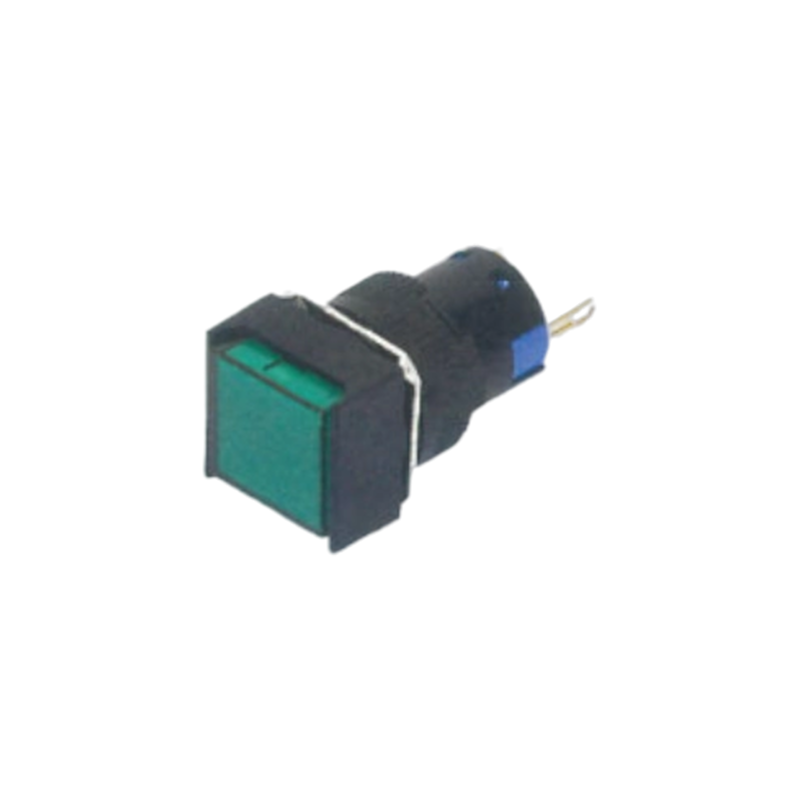 Industrial General Purpose Button Switch with Indicator Light For high-cycle industrial control panels, this robust button switch provides consistent contact resistance and integrated visual feedback, helping operators quickly identify system status and reduce downtime in demanding environments. View Product →
 In practice, the mechanical life rating is only meaningful if the switch is operated within its intended limits. Oversized operating force can stress the plastic housing and contact springs, while an undersized force may leave the contacts in an indefinite half-open state. Define your operator interface early, especially when the switch is used by gloved operators or in cold environments where finger sensitivity changes.
Environmental Protection and Mounting Considerations
A button switch that works in a clean office environment can fail quickly in a dusty press enclosure or wet outdoor housing. Dust between the moving parts and contacts can increase resistance and cause intermittent operation. Water ingress into a switch body creates a short circuit path and corrosion. High temperatures can soften plastics and accelerate oxidation of silver contacts. Therefore, look for an IP rating that matches the installation, and select a part that is resistant to the specific contaminants present. In many cases, a simple dustproof design can make the difference between a long service life and a field failure. A button switch with a dustproof function and high stability helps in these challenging environments.
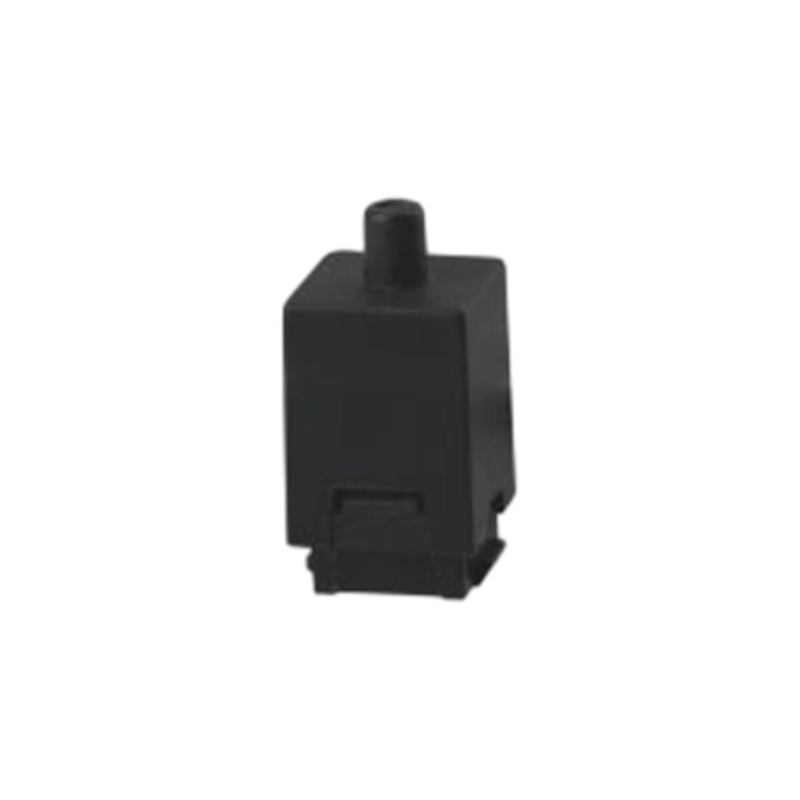 Dust-Proof High-Stability Button Switch for Handheld Tools Designed to resist dust and debris, this switch ensures reliable operation in harsh conditions. Its quick-action mechanism and stable contacts make it well suited for power tools requiring consistent performance and durability. View Product →
 Mounting style also plays a role. A panel-mount button switch needs a consistent hole size and adequate clearance behind the panel for the terminals. A PCB-mount switch requires a specific pin pitch and mechanical support to withstand soldering and handling. If your design already includes a wiring harness and a control board, consider how the switch terminals will connect to the rest of the system. Some families offer solder, screw, or quick-connect terminals, and choosing the wrong one can add assembly time and cost.
Applying the Specs to Your Equipment
Once you have the electrical, mechanical, and environmental parameters written down, you can map them to a product family. For example, a control panel on an industrial machine needs high durability and reliable contact; a household appliance needs consistent operation over many years; a generator needs high current handling with a rugged housing. High-current environments are often the most unforgiving, because standard small switches may fail under surge conditions. A button switch designed for high voltage and high current applications, with thicker contacts and a stronger housing, is a safer choice for those loads.
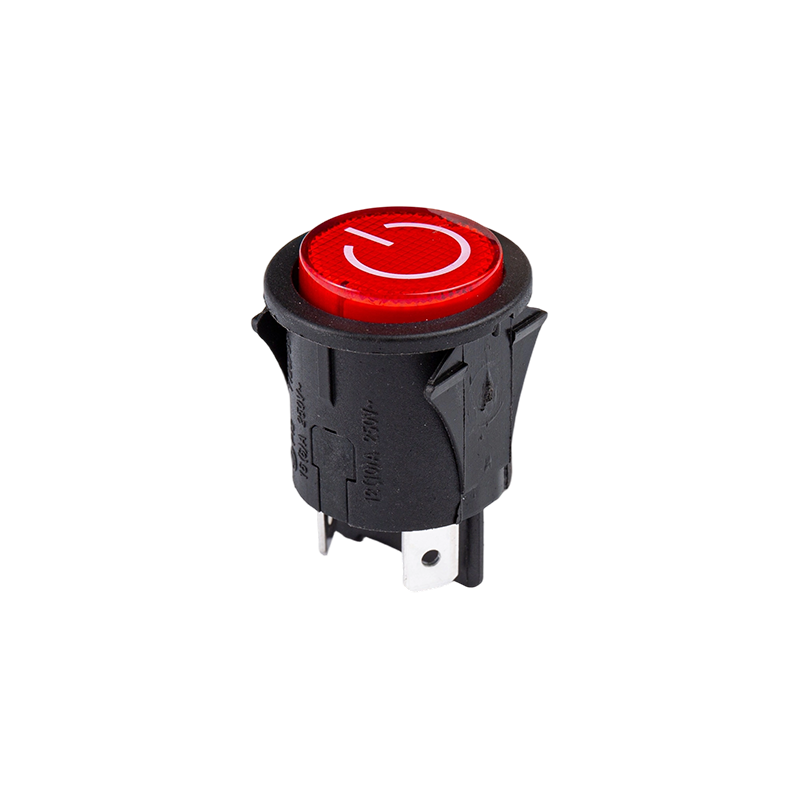 High-Voltage High-Current Button Switch for Heavy Loads Built with thicker contacts and a rugged housing, this switch safely handles high current and voltage. It is ideal for professional power tools and equipment where reliability under extreme electrical loads is critical. View Product →
 Before finalizing the specification, assemble a short list of candidate parts and order samples. Test them in a representative fixture or on your actual equipment. Measure contact resistance before and after a cycle test, inspect the contact surface for signs of arcing, and verify that the operating force stays within your acceptance window. This validation step is often the most cost-effective way to avoid a switch that looks fine on paper but underperforms in the field.
Supplier Selection Matters Beyond the Spec Sheet
Even the best spec sheet can be undermined by production inconsistency. If the operating force varies from batch to batch, your assembly line will experience intermittent rework and the end user will notice a change in the feel of the button. A qualified supplier controls contact material, spring tension, and housing material through documented quality checks. When you evaluate a switch manufacturer, ask about their consistency tolerance, whether they can supply supporting components like wiring harnesses or PCB control boards, and whether they have production capacity for your forecast. These factors directly affect your total cost of ownership and the reliability of your finished product.
Practical Steps to Specify Your Next Button Switch
- Write down the load type, voltage, current, and switch frequency.
- Decide whether the switch needs to be momentary or maintained, and whether it requires LED indication.
- Identify the environmental conditions: temperature range, dust, moisture, and chemicals.
- Check the mounting hole size, terminal type, and available space in the enclosure.
- Compare candidate parts against the electrical and mechanical requirements, and order samples for validation.
- Measure contact resistance and operating force on the samples before passing them to your design team.
Button switches are small components, but they carry a large share of the reliability responsibility. By grounding your selection in measurable electrical and mechanical parameters, and by verifying the environment where the part will operate, you can avoid expensive surprises downstream. Start with the specs, validate with samples, and work with a supplier that maintains consistency across production runs.


A Producator de intrerupatoare pentru aparate care se concentrează pe dezvoltarea, producția și vânzările de comutatoare de 21 de ani;
Link-uri produse
Informații de contact
Tel: +86-021-33752188
Telefon: +86-15902103688
E-mail: [email protected]
[email protected]
[email protected]Adresa: No. 580 Shenzhou Road, Fengxian District, Shanghai, China
Drepturi de autor © Shanghai Qijia Electronics Co., Ltd. Electronic Switches Suppliers

